
How Much Does Sump Pump Installation Cost in Central Illinois?
Sump pump installation in Central Illinois usually costs $1,200 to $3,500 installed when you are replacing a pump in an existing pit. Cutting a brand new pit into a finished basement floor runs $3,000 to $6,500. A battery backup adds about $900 to $1,800.
Those are real installed prices, not equipment-only numbers off a big box shelf. Below is what sits behind each figure so you can tell a fair quote from a padded one.
What Are the Signs You Need a New Sump Pump?
Most homeowners do not go looking for a sump pump price. They start searching after something goes wrong. These are the symptoms we get called for most often in Tazewell and Peoria County basements:
- The pump runs constantly, even when it has not rained in days
- The pump hums or buzzes but no water leaves the pit
- Grinding, rattling, or clunking noises from the basin
- Standing water on the floor around the pit after a storm
- Visible rust, scale, or a pump that is more than 8 years old
- The float switch sticks and you have to bump it to get the pump going
A pump that short cycles or sticks is not a maintenance issue you can ride out through spring. It is a failure in progress. If you are also seeing damp spots or a jump in your water bill, read how to tell if you have a water leak first so you are solving the right problem.
Why Do Central Illinois Basements Flood in the First Place?
Central Illinois sits on heavy clay soil. Clay does not drain. When we get two or three inches of rain in an afternoon, water saturates the ground around your foundation and has nowhere to go, so it pushes against your basement walls and floor. That pressure is called hydrostatic pressure, and it is the reason a sump pit exists.
The National Weather Service notes that just one inch of water in a home can cause thousands of dollars in damage. Spring snowmelt on frozen clay is just as hard on a basement as a summer downpour. We wrote more about that seasonal pattern in how heavy rain stresses Central Illinois drains.
The takeaway: your sump pump is not an optional appliance here. It is the only thing standing between groundwater and your finished basement.
What Does the Installed Price Actually Include?
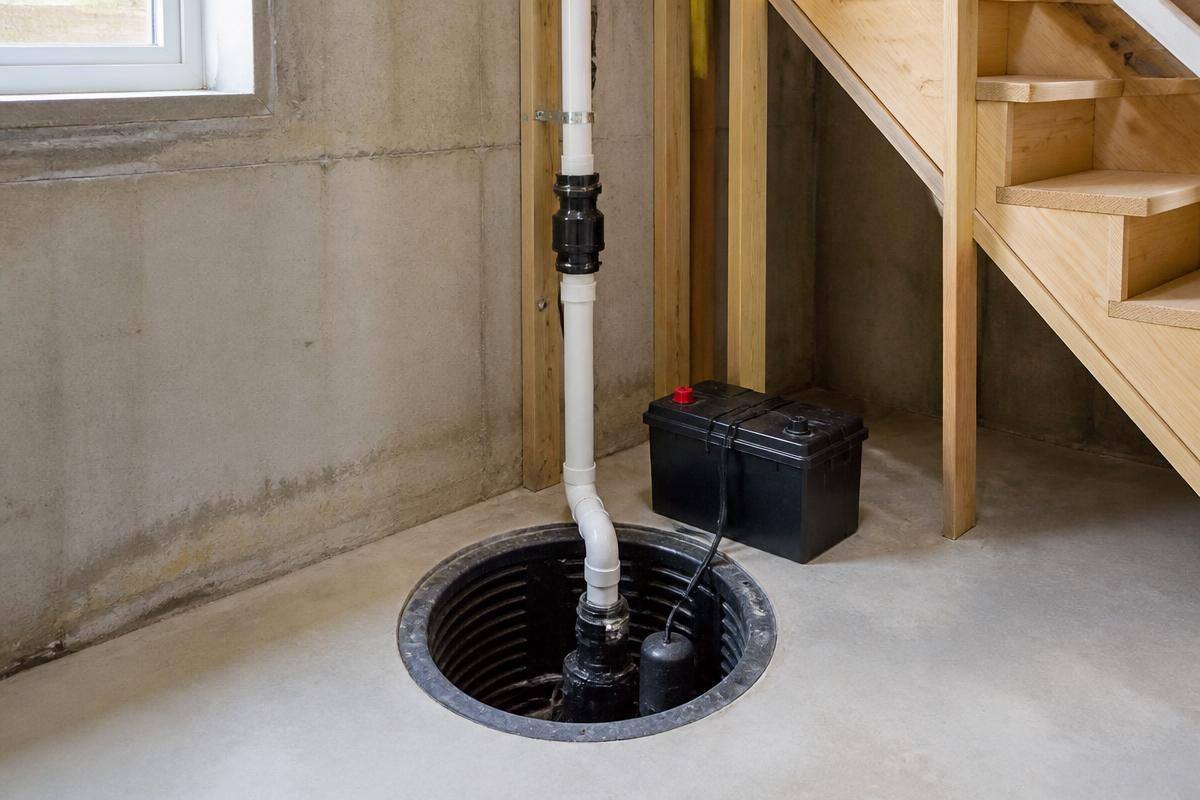
A real quote covers the whole job, not just the pump sitting in the box. Here is what a standard replacement in an existing pit includes:
- The pump itself. A cast iron, one-third or one-half horsepower submersible pump runs $250 to $700. Cast iron sheds heat better and lasts longer than plastic housings.
- Float switch. Vertical or tethered, depending on your basin width. Switch failure is the single most common reason a pump quits.
- Check valve. Keeps discharged water from draining back into the pit and making the pump cycle twice for the same water.
- Discharge piping. New PVC from the pump up and out through the rim joist or sidewall, sealed and supported properly.
- Basin lid and seal. Controls radon entry, odor, and debris falling into the pit.
- Labor, haul away, and testing. We fill the pit and watch a full cycle before we leave.
Permits are required in some municipalities. Any plumber who leaves permits, the check valve, or discharge work off the quote is not quoting the same job as everyone else.
What Makes One Sump Pump Quote Higher Than Another?
Two homes on the same street can get quotes $2,000 apart for honest reasons. These are the variables:
- New pit versus existing pit. Breaking concrete, excavating, setting a basin, and patching the floor is a full day of work and the biggest single price driver.
- Horsepower and pump quality. A half horsepower cast iron pump with a five year warranty costs more up front and less over ten years.
- Discharge routing. If the existing line dumps too close to the foundation, it needs to be extended out and away or the same water comes right back.
- Electrical. A sump pump needs its own dedicated GFCI outlet. If there is not one within reach, an electrical circuit adds to the job.
- Backup system. Battery backup or a water-powered backup adds hardware, wiring, and time.
- Access. A tight crawl space or a finished basement wall in the way takes longer than an open utility corner.
When you compare quotes, line them up item by item. Cheapest is only cheapest if it is the same scope.
Do You Need a Battery Backup Sump Pump?
In Central Illinois, yes, and here is the reason. The storms that overwhelm your basement are the same storms that knock out power. A primary pump with no power is a decoration. We have pulled dead pumps out of flooded basements where the pump was perfectly fine and the house had simply been dark for six hours.
A battery backup system costs about $900 to $1,800 installed and buys you roughly 6 to 12 hours of pumping on a full charge, depending on how often the pump cycles. Water-powered backups run on municipal water pressure and need no battery, but they only work on city water and use water while they run.
If your basement is finished, holds a furnace, holds a water heater, or stores anything you would hate to lose, a backup is the cheapest insurance in the house.
How Long Does a Sump Pump Last Before It Needs Replacing?
Plan on 7 to 10 years for a primary sump pump, and closer to 5 to 7 years if your pit runs often because of a high water table. Battery backup batteries typically need replacement every 3 to 5 years even when the pump is fine.
Testing takes 60 seconds. Pour a five gallon bucket of water into the pit, watch the float rise, confirm the pump kicks on, and confirm it shuts off cleanly when the water is gone. Do that every spring and every fall. If the pump hesitates, chatters, or keeps running after the pit is empty, get it looked at before storm season instead of during it.
Replacing a pump on your schedule costs $1,200 to $3,500. Replacing it after a flood costs that plus flooring, drywall, and anything that was sitting on the basement floor.
Is a Sump Pump Worth the Cost Compared to Water Damage?
Run the math honestly. A finished basement flood in Central Illinois routinely runs $10,000 to $25,000 once you add water extraction, carpet and pad, drywall, trim, and mold remediation. Most standard homeowners policies do not cover groundwater seepage without a separate water backup endorsement, so a large share of that lands on you.
Against that, a properly installed pump with a backup is a few thousand dollars that protects the house for the next decade. It also protects the furnace and water heater sitting on that floor, which is a second repair bill nobody thinks about until it happens.
That is the whole argument. It is not about the pump. It is about what is downstream of the pump failing.
How Do You Get a Sump Pump Estimate in Central Illinois?
At Trouble Free Heating, Cooling & Plumbing, we do not price a sump pump over the phone off a square footage guess. We come out, look at the pit, check the discharge routing, check your electrical, and ask how often the pump runs in a normal spring.
Then we give you clear options in plain English: a straight replacement, a replacement with battery backup, or a new pit if your basement does not have one. You get one installed price that covers the pump, the check valve, the discharge work, the lid, the testing, and the haul away. No hourly games and no surprise line items on install day.
We handle sump pump repair and installation across Pekin, Peoria, Morton, Washington, East Peoria, Canton, North Pekin, Mackinaw, and Tremont. Free estimates are available for new installations.
To keep your home trouble-free, call (309) 347-5309 or schedule your sump pump estimate today.